
When You’re Only Here Because Someone Else Wants You To Be: Starting Therapy Because Someone Else Wants You To


Not everyone starts therapy because they want to.
In fact, a lot of people end up here because someone else reached a point where something needed to change. It might be a partner who is frustrated or worried, a family member who has been bringing it up for a while, or even a job that has made it clear this is not optional anymore. A lot of people find themselves starting therapy because someone else wants them to, whether that pressure comes from a partner, family member, or job.
Sometimes the pressure is direct, and sometimes it is more subtle. Either way, it can leave you feeling like this was not really your decision.
If that is where you are coming from, it makes sense that part of you feels unsure, resistant, or even skeptical about the whole process.
When Starting Therapy Because Someone Else Wants You To Doesn’t Feel Like Your Problem
One of the most common starting points is not “I need help,” but something closer to, “This is being made into a bigger deal than it actually is.”
You might feel like you are managing things well enough, or that other people are overreacting to something that does not feel as serious from your perspective. You may also feel frustrated that the focus is on you, especially if the situation feels more complicated than that.
That perspective is important. It tells you something about how you are experiencing the situation, even if other people see it differently.
Starting therapy in this place does not mean you agree with everyone else. It simply means something in your life reached a point where continuing in the same way was no longer working for the people around you, and now you are being asked to take a closer look.
What Usually Brings People In
Even when someone is here because of external pressure, there is often something underneath that does not feel entirely settled.
It is not always obvious, and it is not always something people talk about right away. It can show up as tension in a relationship that keeps coming up, feeling like you are being questioned or monitored more than usual, or noticing that certain habits are harder to manage than they used to be.
Sometimes it is less specific than that. It may just feel like things have become more complicated, more stressful, or more difficult to keep contained.
You might not be thinking, “I need to change everything,” but there is usually something that you would prefer to feel different. Going to therapy for someone else can feel frustrating at first, especially if it doesn’t feel like your decision. For some people, this also shows up as a quieter sense of feeling off or disconnected without a clear reason, even when everything looks fine on the surface.
Why Therapy Gets a Bad Reputation in This Situation
A lot of people hesitate to engage in therapy when they feel pushed into it because they assume it will involve being told what to do or being forced to make changes they are not ready for.
There is often a concern about being judged, labeled, or pressured into agreeing with a perspective that does not feel accurate.
That is where a lot of the resistance comes from.
In reality, therapy is not supposed to work that way. The goal is not to convince you that you are wrong or to push you into a decision before you understand what is actually going on.
A good starting point is simply understanding your perspective, your experience, and what makes sense to you, even if that looks different from what other people expect.
You Don’t Have to Be Fully Bought In
There is a common idea that therapy only works if you are completely ready and motivated. That is not how it usually looks in real life.
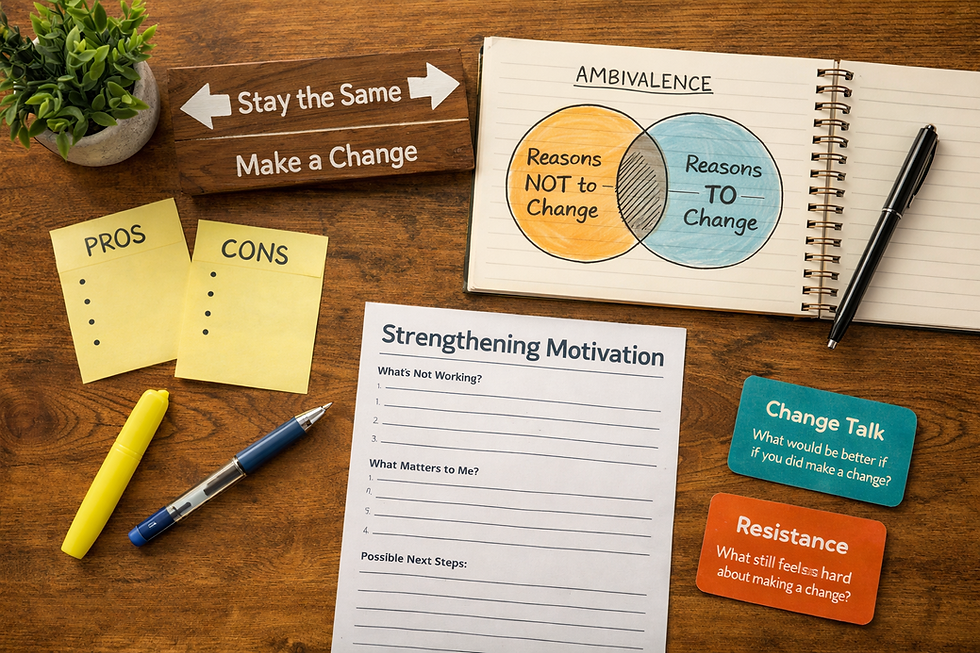
Many people start therapy feeling unsure, skeptical, or only partially engaged. Some are there because it felt easier to agree to come than to keep having the same conversations at home or at work.
That does not mean the process will not be useful.
You do not need to walk in with a clear goal, a full explanation, or a strong commitment to change everything right away. You can start by talking about what led you there, what you agree with, what you do not agree with, and what you are not sure about.
That is enough to begin.
What Therapy Can Actually Be in This Situation
Even if you were encouraged or pushed to come in, therapy can still be used in a way that feels relevant to you.
It can be a space to sort out what you actually think about the situation, separate from other people’s opinions. It can help you understand patterns you may not have looked at closely before, especially if things have started to feel harder to manage or more stressful over time.
It can also give you a place to talk openly without needing to defend yourself or minimize your experience.
That does not mean you have to commit to a specific outcome. It means you have the opportunity to better understand what is going on and decide what, if anything, you want to do differently.
For Family Members Reading This
If you are someone who encouraged a partner, family member, or loved one to seek therapy, it can be helpful to understand that they may not be coming in with the same level of urgency or concern that you feel.
That does not mean they are not capable of change. It means they are starting from a different place.
Pressure can get someone through the door, but it does not create internal motivation on its own. That usually develops over time, especially when the person begins to understand their own experience more clearly.
If This Is Where You’re Starting
You do not need to decide right now whether you fully agree with why you are here. You do not need to have a label for what is going on, and you do not need to commit to a specific type of change.
If something brought you here, even indirectly, that is enough of a starting point.
From there, the focus can shift to understanding what is actually happening and what, if anything, you want to be different moving forward.
This is often the kind of situation that comes up in therapy, especially when you’re not fully convinced you need to be there but something still isn’t working. You can learn more about how I approach this here.
If this is where you’re starting, you don’t need to have it all figured out before reaching out.
You can contact me here.


Comments